The shortage of housing has been a problem in major Spanish cities since the early days of industrialization. During the first half of the 20th century, the authorities were unable to suggest or implement effective and lasting solutions. In 1957, the Ministry of Housing was created with the aim of bringing some order to the disperse and ineffective public housing policies from the early years of Francoism and to get ahead of a likely increase in the scale of the problem. The reality far exceeded the forecasts, however. In his speeches, Franco had proclaimed “one family, one home”. In 1950, authorities estimated that there was a shortage of one million homes. That structural insufficiency was compounded by an unprecedented population increase and the migratory waves spurred by improvements in the economy, which intensified the demand for housing precisely in the places where there was already a shortage.
In the late 1950s, the Spanish political regime gained a new international status, mainly because Spain became an ally of the United States within the framework of the battle between blocs in the Cold War, ending the regime’s international isolation. A series of diplomatic gestures culminated in the establishment of American military bases in Spain. In return, the regime benefitted from a revamped image internationally and significant economic aid. The consequence of this new international status was an improvement in the country’s economic conditions and investment capabilities, reindustrialization, and the opening of borders to tourism. Beginning in 1959, this period of increased openness and liberalization brought important social changes, which were reflected in the infrastructure and urban environments. This period has generally been referred to as the years of developmentalism.
The regime was also given a new structure in response to the new situation: new bodies, such as the Ministry of Development Planning, were responsible for implementing economic and social development plans, with the goal of designing and promoting the industrialization and modernization of the country, including the Stabilization Plan of 1959. There was strong growth in industry, especially in sectors such as steelworks, shipbuilding and vehicle manufacturing. Foreign investment and the growth of industrial production were key in this process. Significant investments were made in infrastructures, including roads, railways and airports, which supported transport and trade both inside the country and internationally. The arrival of foreign tourists was encouraged, which sparked the construction of tourist infrastructures and generated employment in the service sector. Tourism became one of the country’s main sources of income. The result was spectacular economic growth, with an annual average of 7%.
As was the case in previous phases, most opportunities were concentrated in large metropolitan areas, specifically Madrid, Barcelona, Valencia and Bilbao, which saw new industrial developments such as the construction of the SEAT facility in Barcelona’s Zona Franca. In some cases, the need to supply these factories with workers went hand in hand with the creation of specific housing neighbourhoods. This was the case of the new housing complex for SEAT workers designed by the architect and businessman José María Bosch i Aymerich on Passeig de la Zona Franca in Barcelona, which would eventually contain some 1,700 homes. It is an open-plan neighbourhood that combines tall buildings with amenities amidst open spaces where car parks and gardens are blended together. The extremely simple brick construction generated two main types of buildings with favourable ventilation conditions and sun exposure.
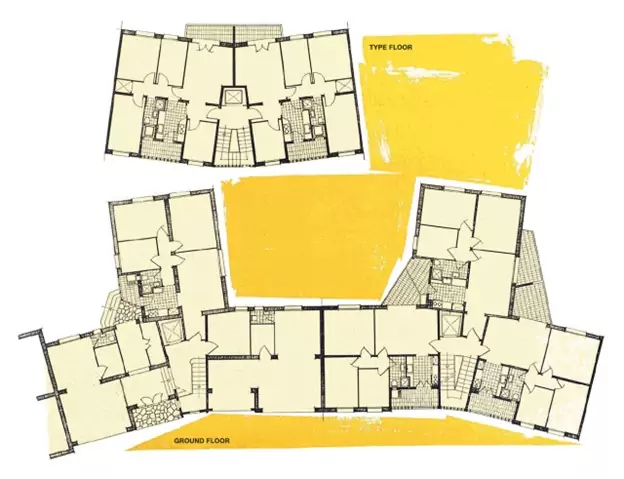
Housing typologies in the SEAT workers’ neighbourhood by Josep Maria Bosch i Aymerich in Barcelona’s Zona Franca, 1953.
Industrial Villages
While the principal problem of workers’ housing was concentrated in the country’s large cities, the pursuit of widespread industrialization led to the creation of new towns or neighbourhoods associated with farms and industries that needed to be located in remote or isolated places away from existing residential areas. We are referring, for example, to power plants that had to be situated near dams and rivers, nuclear power plants that could not be built near consolidated urban areas, mining operations or other industrial facilities that, due to their size or dangerous conditions, could not be situated in highly populated areas, and housing for the workers who were building large infrastructures such as highways or railways. In the early days of industrialization, the need to locate factories in places with abundant water to power steam engines gave rise to the industrial colonies of the 19th century. The 20th-century industrial villages aimed to compensate for their isolation by improving the residents’ living conditions through the quality of housing and the services offered.
Thus, in the 1960s, the industrial sector served as the driver for remarkable residential architecture in the form of small towns or self-contained cities equipped with all kinds of facilities. These urban fragments offered much more advantageous conditions and better quality – both in terms of construction and urban planning – than the housing estates driven by speculation. The quality of the housing and the range of services served as an attraction for skilled workers.
On the Cantabrian coast, especially in Asturias, there were notable examples of new industrial towns such as Llaranes, with ties to the company ENSIDESA. On the banks of the Nalón River, Ignacio Álvarez Castelao built the village of Ribera de Arriba. The possibility of designing a residential development from the ground up was used to experiment with new urban forms and modes of aggregation. In this case, the design adopted an organic growth model with small groupings forming a hooked cross shape in plan, where the dwellings – on a 1.6 x 1.6 m grid – were organized across two storeys
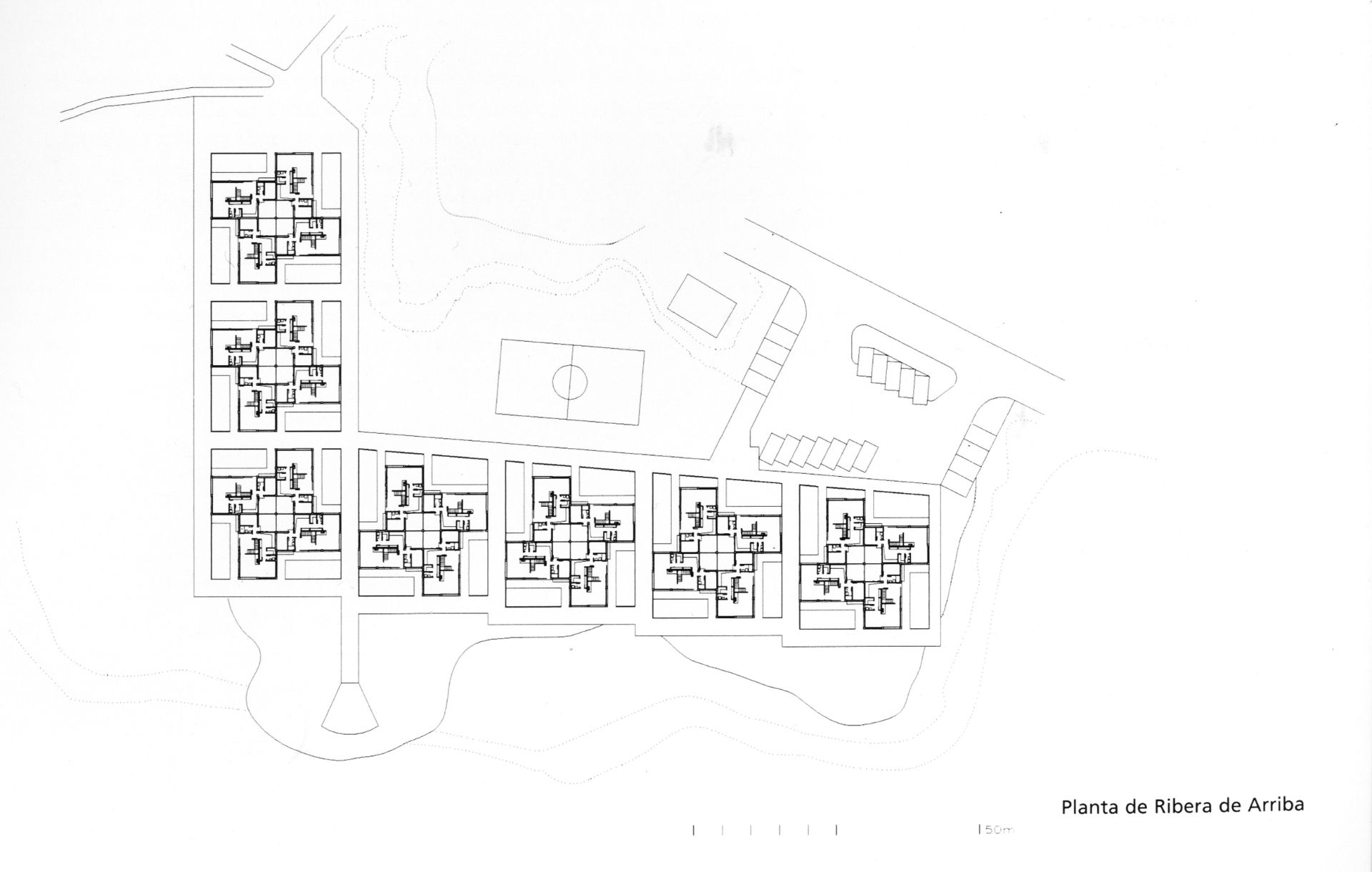
Housing groups in the Ribera de Arriba settlement designed by Ignacio Álvarez Castelao. 1962-1968.
The nuclear power plants that were being built in Spain also required accommodation for their workers. The developers made major efforts to attract them, commissioning leading architects to design the accommodations and facilities. Antonio Fernández Alba, for example, designed the housing complex for the workers at the José Cabrera Nuclear Power Plant in Guadalajara. Also worthy of note is the HIFRENSA village for workers at the Vandellòs Nuclear Power Plant. On an exceptional site facing the Mediterranean Sea, Antoni Bonet Castellana designed a gated community on prime land with excellent amenities and high-quality public spaces. Although it is a working-class neighbourhood, many of the homes were large, depending on the workers’ positions and whether they were single or married. The quality of the urban environment, as well as the facilities and the housing itself, was part of the company’s strategy to attract workers to an isolated area near an energy infrastructure that roused suspicions regarding safety. The different clusters, especially the ones built for workers – which are the most plentiful – cover large areas of the landscape, and the urban development is also included in the project. A single, large building, with a large footprint, centralizes all the services ranging from shops to leisure venues and schools. In 2023, the complex was declared a Site of Cultural Interest in the Historic Site category.

Housing blocks intended for workers at the Vandellòs nuclear power plant and their families. Hifrensa Village, Antoni Bonet Castellana, 1967-1975. © Centro de Análisis Integral del Territorio (URV)
The Deterioration of Urban Environments
Housing developments built by industrial companies for their workers were an exception within a much more problematic landscape. People moving to large cities for work usually did not receive any help from employers or authorities in terms of accommodation. In the best-case scenario, there were solidarity networks of people who had migrated earlier from the same place to the same destination.
The process of urban concentration had been occurring since the early days of industrialization, but in the 1960s the pressure on cities was much greater than in previous decades. Shantytowns had become permanently established by the 1950s. In Barcelona, for example, the widespread occupation of the coast could not be avoided, as in the case of Somorrostro. From 1960 onwards, pre-existing housing-related issues became much more pronounced. They included densification through subletting, that is, a progressive increase in the number of people inhabiting a single dwelling; the conversion of warehouses, basements, back rooms and other unsuitable premises into substandard housing; and, finally, the most visible phenomenon, shantytowns, self-construction, and the occupation of caves or geographically unsuitable and unsafe spaces such as hillsides and riverbeds. Before beginning to analyse the policies that attempted to address the problem and the resulting architectural achievements, we should understand the scope of the phenomenon of internal migration, which changed the social landscape and the major cities in Spain.
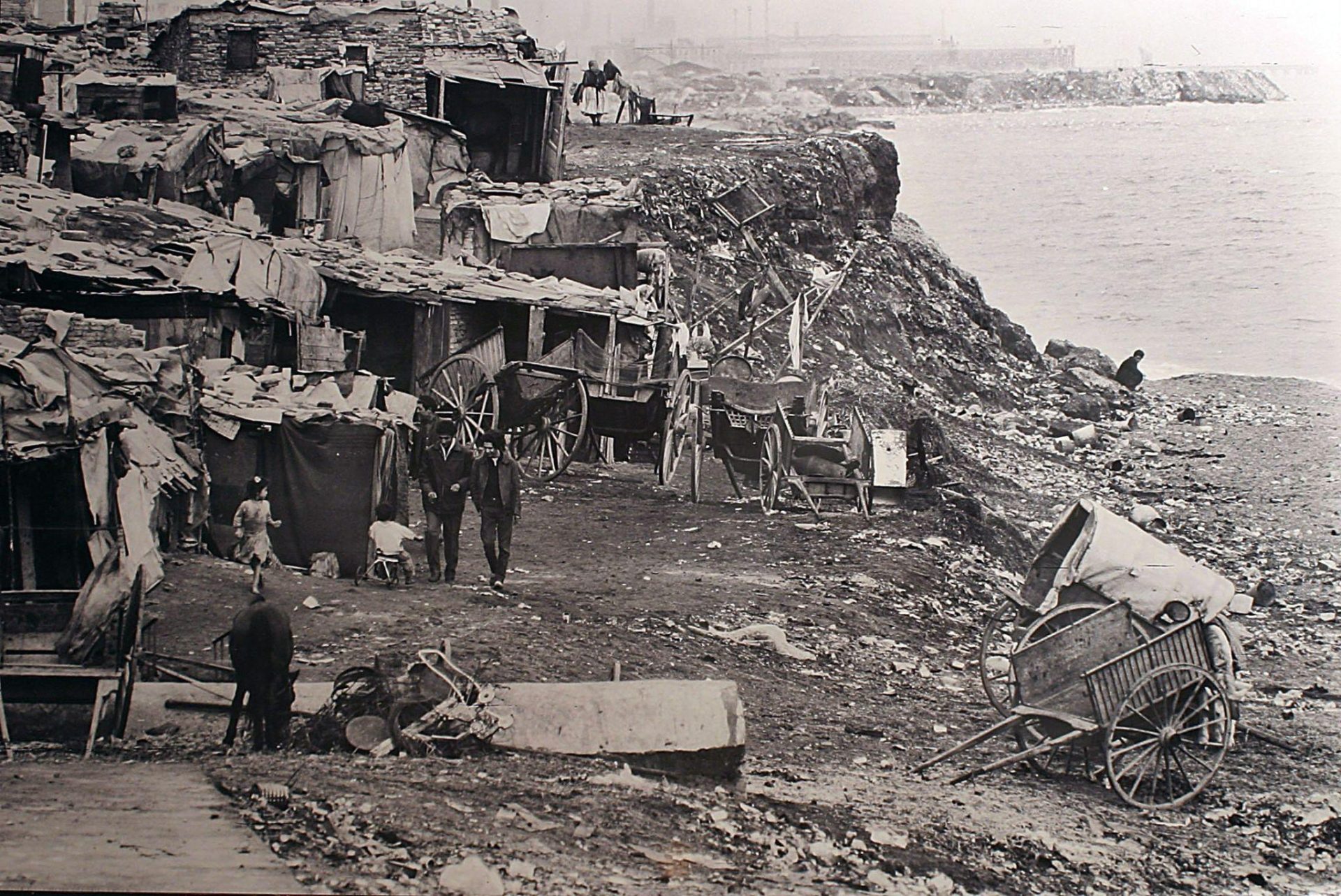
Image of the shantytown that sprung up on Somorrostro Beach in Barcelona in the mid-20th century. Author unknown.
In the Barcelona area, beginning in the 1960s, immigration brought a continuous flow of about 45,000 people per year. As an example, in 1970, 34% of the people born in the province of Almería had moved to Catalonia: some 127,000 people. There were more people born in Almería living in Barcelona than in the city of Almería, which had 114,000 inhabitants. Something similar was happening in provinces like Granada, Jaén, and Córdoba. The total number of people who emigrated to the Barcelona area between 1960 and 1974 is estimated at approximately 1,460,000. Between 1960 and 1970, there were approximately 20,000 self-built shacks in the municipality of Barcelona alone, with an estimated population of 100,000 inhabitants. The occupation of riverbeds and coastal areas resulted in numerous tragedies, which took on dramatic proportions during the flood of the night of 15 September 1962, which is estimated to have killed some 600 people in the Vallès area – although the exact figure is unknown since many people were not accounted for in the census.
In the Madrid area, there was a constant migratory flow of around 50,000 people per year beginning in the 1960s. In 1970, approximately 32% of people born in the province of Extremadura had emigrated to the Community of Madrid, totalling some 180,000 people: there were more people from Extremadura living in Madrid than in cities like Badajoz and Cáceres, where the combined population was 160,000 inhabitants. Similar situations were seen in other provinces such as Toledo, Ávila and Segovia. The total number of people who migrated to the Madrid area between 1960 and 1974 is estimated to be around 1,600,000. The problems arising from the influx of newcomers were similar to what had been seen in the Barcelona area: between 1960 and 1970, some 30,000 shacks were tallied in the municipality of Madrid alone, housing an estimated population of 130,000 people. Like in Catalonia, the occupation of vulnerable areas like riverbeds and peri-urban areas resulted in various tragic episodes, including the overflowing of the Manzanares River in the spring of 1963, where is estimated to have killed more than 400 people.
In Valencia, the annual influx of immigration in the 1960s was about 40,000 people, and in Bilbao ─ which had less than 300,000 inhabitants in 1960 ─ it was 30,000. In the Valencia area, most came from nearby areas like Murcia or the Valencian provinces of Alacant and Castelló. In the Basque Country, the migration came from northern Spain, especially from the rural areas of León, Burgos, and Cantabria. The total number of people who emigrated to the Valencia area between 1960 and 1974 is estimated at approximately 1,200,000, and 900,000 in Bilbao during the same period.
A New Ministry for Housing
The creation of the Ministry of Housing was preceded by the approval of the Land Law of 1956, which organized the different organs, figures and urban planning schemes in Spain and established a unified land regime. This allowed the new ministry to take over the urban planning powers stipulated under the law.
With José Luís Arrese as its first director, at the time of its creation the ministry consisted of a sub-secretariat and two general directorates: the General Directorate of Housing, which included the existing National Housing Institute, previously under the Ministry of Labour, and the General Directorate of Urban Planning, comprising the General Directorate of Architecture and Urban Planning, previously under to the Ministry of the Interior. The new ministry absorbed and organized the scattered institutes and directorates that had previously been attached to different ministries and generated a framework for the creation of new bodies, including those that would eventually regulate the quality of construction and its materials.
The ministry’s two main objectives were to alleviate the serious housing deficit resulting from population growth and urban concentration, and to try to curb and regulate the rapid and disorderly urban development present in major urban centres. Furthermore, the new ministry, following the dissolution of the General Directorate of Devastated Regions, also had the authority to act in cases of natural disasters. In the year it was created, 1957, the city of Valencia was affected by a flood that was the first large-scale test of its management capacity.
The National Housing Plan (1956-1960) began to be implemented before the creation of the ministry, but it was accelerated and expanded under the new ministerial structure. The main aim of the plan was the construction of subsidized housing. Partially subsidized by the state, the price of the units was regulated and they were accessible to workers and the middle classes. They were financed through soft loans and state subsidies. In addition, the creation of housing cooperatives was encouraged, and private developers were given incentives to participate through tax benefits and favourable loan conditions. This public-private collaboration was intended to increase the available housing stock rapidly.
Social housing projects were developed on a scale never seen before, with large residential complexes cropping up on the outskirts of cities. These new neighbourhoods were intended to house people living in insecure conditions, such as shantytowns and informal settlements, as well as the many people arriving in the country’s large metropolitan areas.
The decentralization of residential construction, focusing development in peripheral areas of cities and rural towns, aimed to avoid an indiscriminate increase in urban density; however, to make this possible, there was a need for prior conditions in terms of infrastructure and connections to guarantee the viability of these new neighbourhoods and cities. To that end, urban planning schemes were implemented to structure the growth of cities and avoid disorderly development. In addition to building housing, the ministry focused on improving basic infrastructures in new urban developments, including water, electricity, and sanitation networks. In many cases, these actions were unsuccessful yet contributed to transforming the urban landscape in many Spanish cities, as we will see in more detail in the next section.
A few years before the creation of the Ministry of Housing, the National Congresses of Architecture had been held, in 1949 and 1951. The congresses included discussions on the need to modernize Spanish architecture without losing the traditional values promoted by the Franco regime. In the second congress, held in Barcelona, the housing problem occupied a significant amount of attention. Although the congresses did not openly favour a return to a rationalist language, they did open the door to discussing the possibility of integrating modern elements within a framework that respected the national identity. In short, with certain restrictions, the congress in Barcelona signalled an openness towards the modern movement, paving the way for Spanish architects to once again explore rationalism and functionalism in practical and affordable projects such as social housing.
One of the practical consequences was the definitive adoption of the open block typology for new housing developments, which replaced the traditional closed block. Architects began designing blocks with open layouts and detached buildings that would more freely allow for the implementation of fully modern distributions and languages. The planning of these developments, on a large scale, went hand in hand with a reduction in the size of the homes. The program was not substantially different from earlier periods: the number of bedrooms was kept stable since a high birth rate was still expected among the working classes. There was a significant reduction in the size of the rooms and the ceiling heights to permit an increase in the number of floors in high-rise developments. Also, in some cases, there were additional bathrooms, usually a toilet adjacent to the living room.
In many Spanish cities, there are multiple examples that resulted from this new policy. In Valencia, Santiago Artal Ríos built the housing complex for the Cooperativa de Agentes Comerciales (1958-1961). In an expansion area characterized by closed blocks, the architect broke the residential complex into three free-standing blocks to allow fully modern distribution solutions without a radical denial of the pre-established urban form.
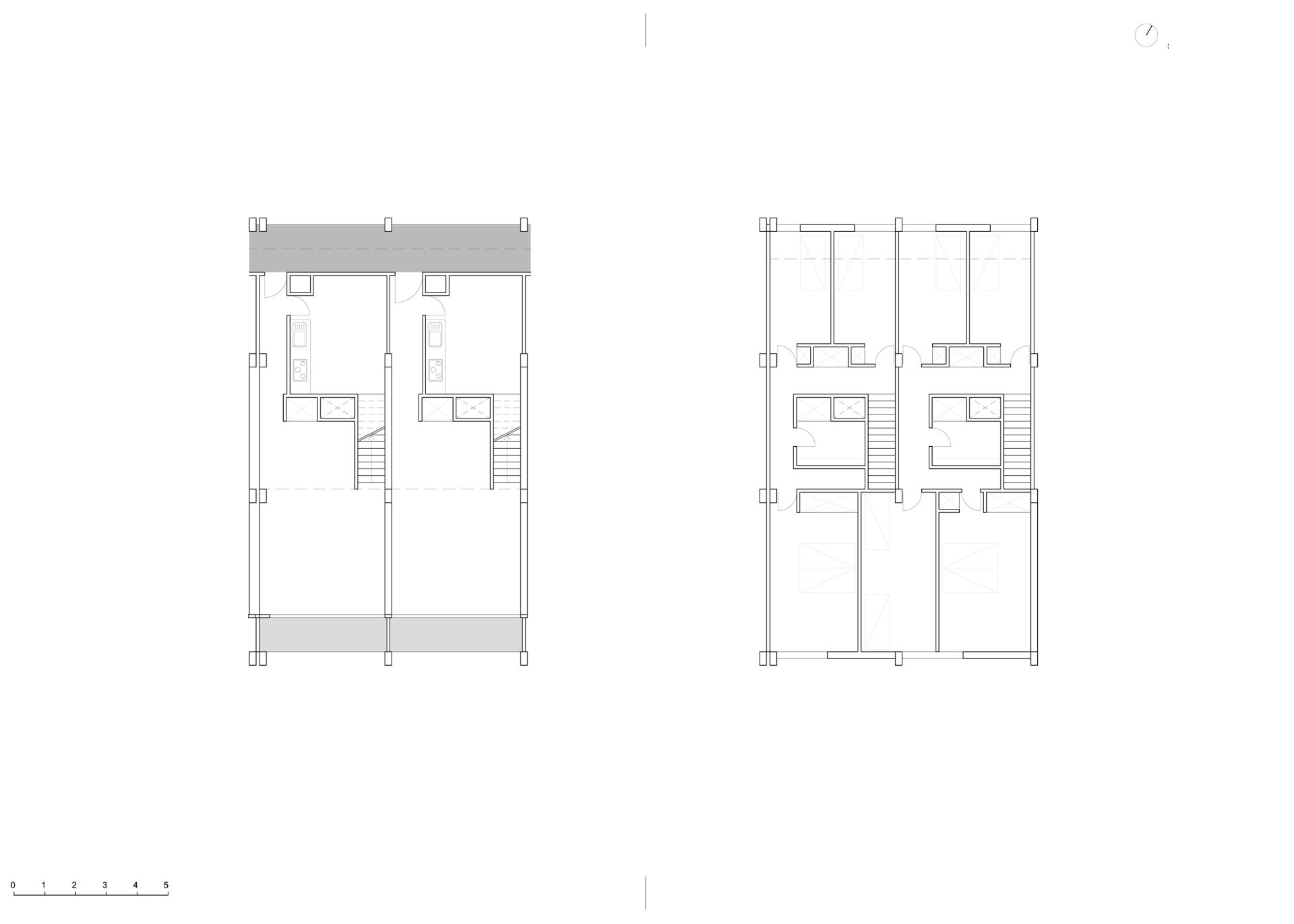
Duplex typologies of the housing complex for the Cooperativa de Agentes Comerciales in Valencia. Santiago Artal. 1958-1961. © Elena Tacconi. Fundación Docomomo Ibérico.
In Madrid, the housing complex Nuestra Señora de Montserrat developed by the company Hogar del Empleado was pioneering in the development of block neighbourhoods with an open layout.
Beginning in the 1960s, these new housing complexes showed a spectacular increase in density with more compact layouts, less distance between blocks, a preference for building typologies based on load-bearing walls with no interior courtyards, added height, smaller dwellings, and lower ceilings. Additionally, new private actors emerged who began developing housing. This was the case of the Hogar del Empleado, created in Francoist Spain in 1947 under the initiative of the priest José María Llanos as part of the regime’s corporate apparatus, with the goal of aiding workers by offering cultural, professional, and spiritual formation aligned with the Catholic values of Franco’s regime. In the 1960s, in addition to its educational work, the Hogar del Empleado began developing housing complexes that also included essential services such as schools, recreational centres, and spaces for religious activities, following the national Catholic ideal of self-sufficient, morally oriented communities.

Aerial view of the Nuestra Señora de Montserrat development in Madrid. 1952-1960
The increase in the density of the developments meant that, in many Spanish cities today, developments from this period are still clearly identifiable in the urban landscape. In cities like Seville, the complexes La Virgen del Carmen, Los Diez Mandamientos, and La Estrella are remarkable examples of modern architecture, and they stand out in an urban landscape that, until that moment, was dominated by regionalist architecture. With innovative urban planning and a smart adaptation to the needs for social housing at the time, the Virgen del Carmen residential complex, built between 1955 and 1958 in the Triana neighbourhood, consists of 52 residential blocks that combine high-rise towers and lower rise linear blocks. This layout aims to balance density of housing with open spaces, promoting community interaction in squares and interior pedestrian streets. The Los Diez Mandamientos housing complex, built between 1958 and 1964, consists of 10 “H”-shaped blocks that efficiently accommodate four dwellings per floor around a shared circulation core. This layout not only optimizes space but also ensures adequate ventilation and natural lighting in the homes.
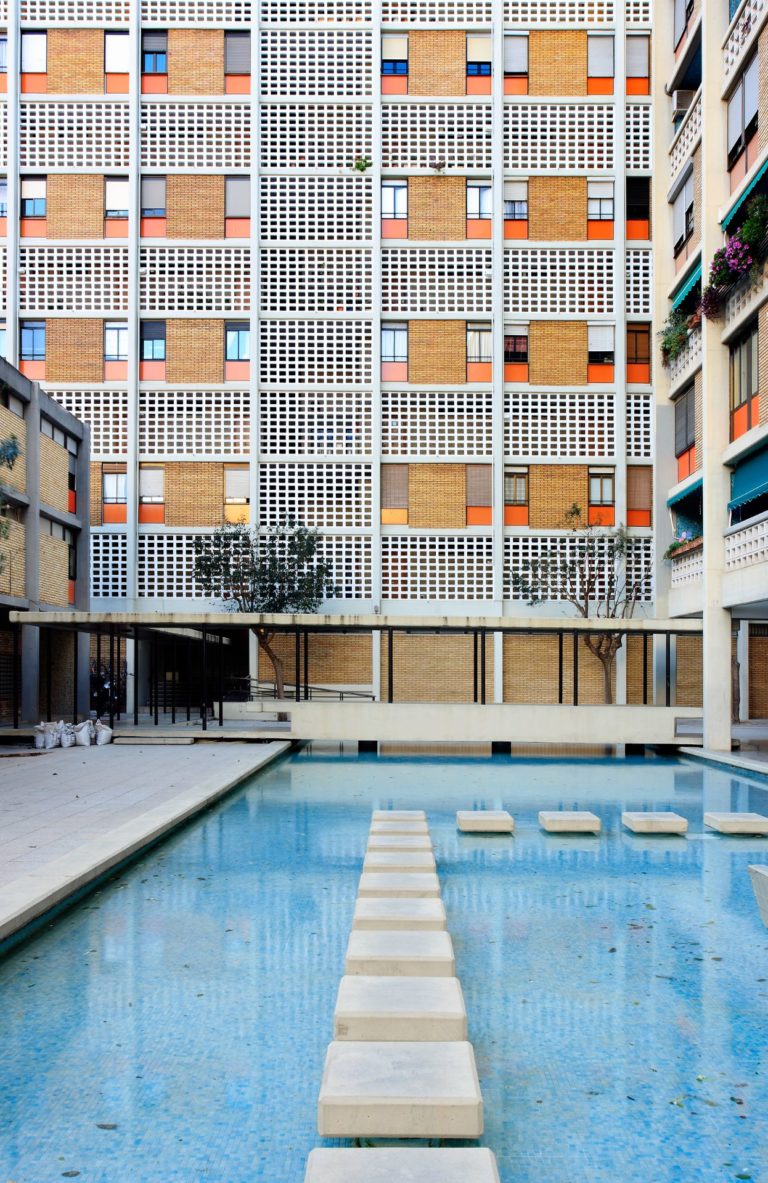
In Valencia, a notable example is the Antonio Rueda complex: its urban layout is organized into five residential units, each consisting of two seven-storey blocks in parallel and one orthogonal four-storey block. These complexes surround landscaped areas that include facilities and single-family homes, generating a particularly complex layout that fosters community life and social interaction.
Como una de las últimas intervenciones de la Obra Sindical del Hogar, el Grupo Antonio Rueda o el Grupo La Paz reflejan una planificación urbana innovadora y una adaptación eficiente a las necesidades habitacionales de la época, consolidándose como un referente en la vivienda social moderna.
As some of the final developments by the Obra Sindical del Hogar, the Antonio Rueda complex or the Grupo La Paz reflect innovative urban planning and an efficient adaptation to the housing needs of the time, making it a benchmark in modern social housing.

Planning for the Gran San Blas neighbourhood in eastern Madrid. © En AA VV, La obra de Luis Gutiérrez Soto, Colegio Oficial de Arquitectos de Madrid, Madrid, 1978.
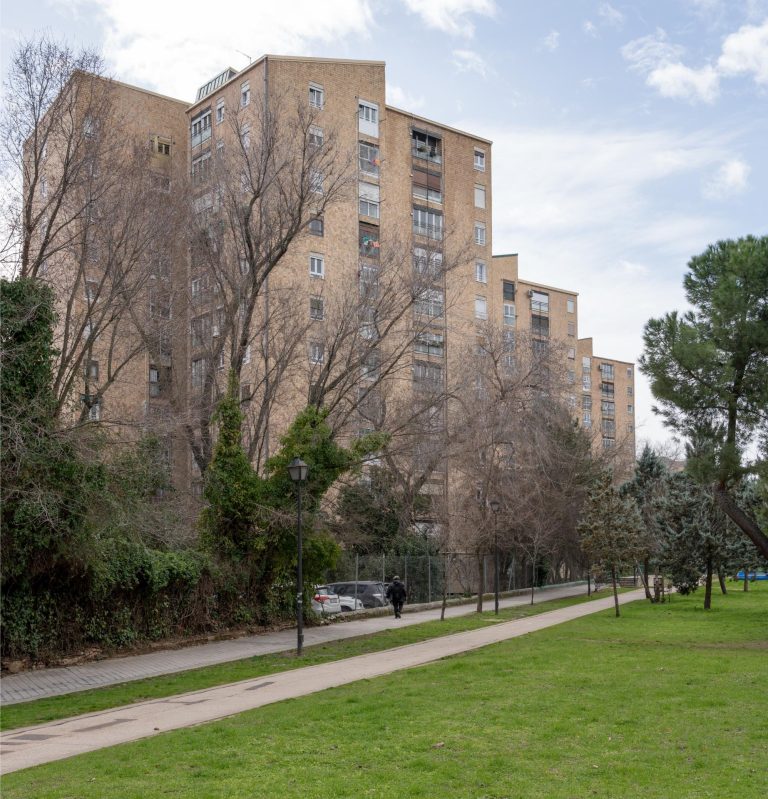
One of the most prominent examples in the Spanish capital is Gran San Blas. Although its development began before the creation of the Ministry of Housing, in response to measures implemented by the new agency, Gran San Blas underwent a change of scale and was ultimately developed in keeping with the ambition inherent in its design. Without the Ministry’s new management mechanisms and funding opportunities, it could not have been developed with such speed. Consequently, Gran San Blas introduced a considerable shift in scale in affordable housing developments and became a milestone in urban expansion based on a completely new built landscape. Construction began around 1958 within the framework of the Social Emergency Plan from that same year, with the aim of providing housing for the growing working population arriving in the capital. Located in eastern Madrid, San Blas occupied a peripheral area that had the potential to absorb some of the city’s population growth, and its development connected with Madrid’s plans for urban expansion in the 1950s and 1960s. The Obra Sindical del Hogar was in charge of this project, which covered an area of 506,551 m² and included the construction of 7,484 housing units and 561 retail spaces, estimated to house a population of approximately 30,000 people.
Great architects of the time worked in the San Blas neighbourhood ─ also called Gran San Blas. Phase G, for example, built between 1958 and 1962, was designed in collaboration by the architects José Antonio Corrales Gutiérrez, Julio Cano Lasso, Luis Gutiérrez Soto and Ramón Vázquez Molezún. Although the homes were modest and reflected the economic limitations of the time, the quality of their architecture resulted in typological floor plans with remarkable spatial qualities, with through-unit dwellings that seek out diagonal sightlines to spatially expand small floor plans.
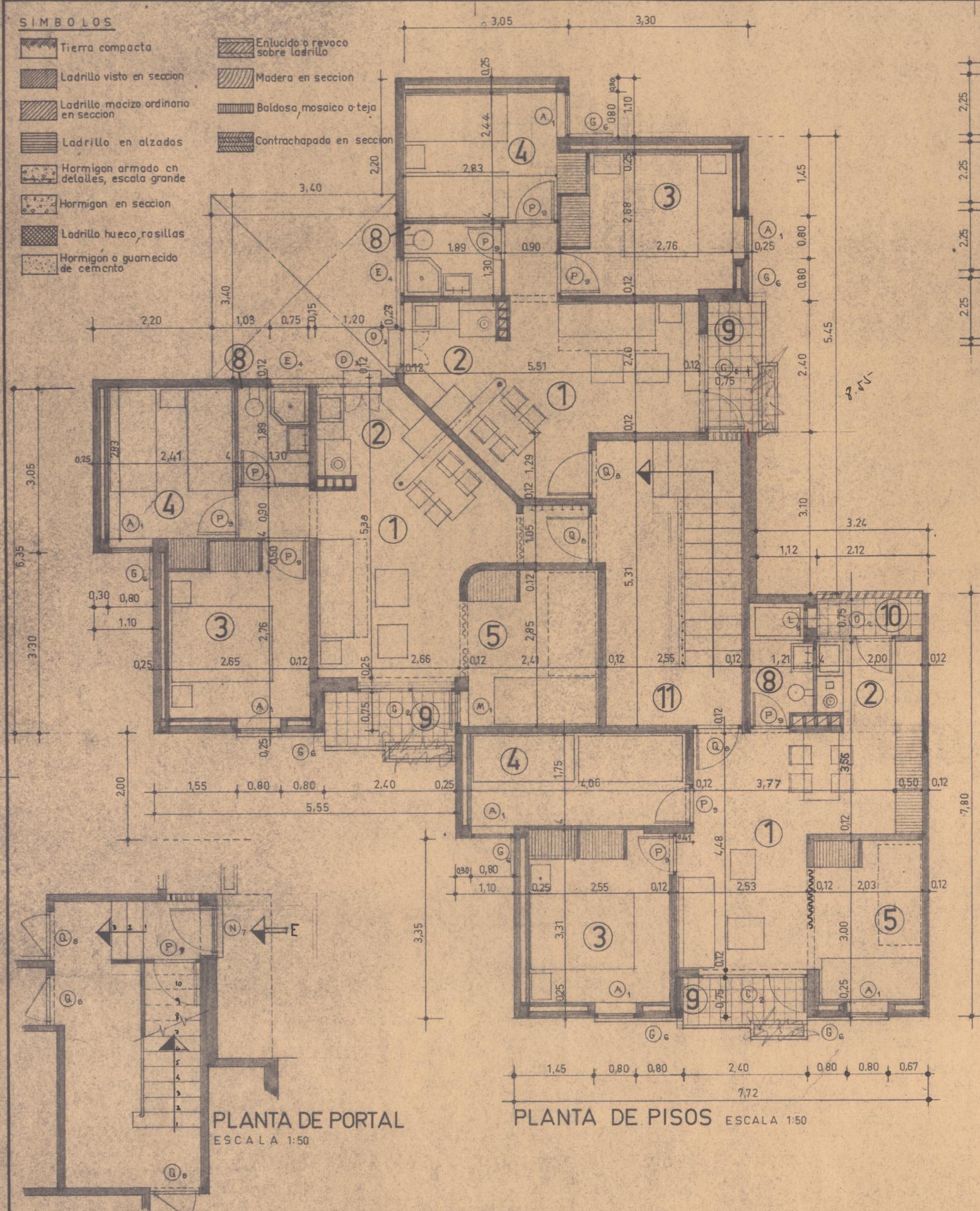
The “A” housing typology in Phase G of Gran San Blas, by the architects José Antonio Corrales Gutiérrez, Julio Cano Lasso, Luis Gutiérrez Soto, and Ramón Vázquez Molezún. 1958-1962. © Archivo Servicio Histórico COAM
Large-scale social housing developments have often been connected with European experiments like the ones by Team X. In England, Alison and Peter Smithson built immense social housing blocks, such as Robin Hood Gardens, using exposed concrete as a formal expression. The size of these residential complexes justifies the term “city-buildings”: single projects that are so large that they include circulation and high rises, and the inclusion of services beyond the strictly residential program. These actions often resulted in security problems. The vertical layout and spatial complexity made law enforcement access difficult and ended up creating pockets of poverty and generating a hotspot for all kinds of criminal activities that were intensified by the social and economic crises of the 1980s. Some of these developments, such as Robin Hood Gardens, the Barbican, and the Trellick Tower in London, earned a bad reputation and their characteristic brutalist aesthetic was stigmatized. Only in recent years has the aesthetic of architectural brutalism come to be appreciated again, and some of these neighbourhoods and buildings have increased in value.
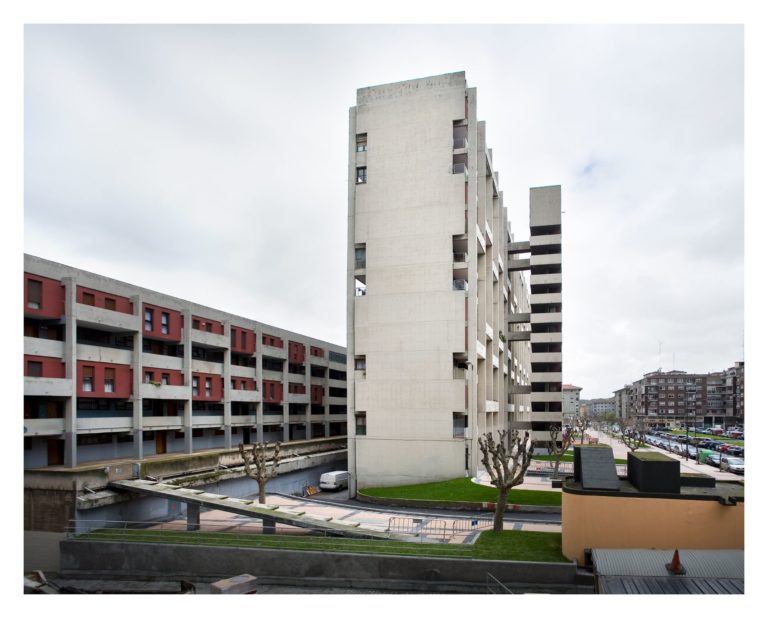
In Spain, architecture consistent with the concept of the “city-building” can be seen in similar situations. Perhaps one of the largest examples is Neighbourhood Unit number 3 in La Coruña, designed by José Antonio Corrales, which comprises three parallel blocks joined by vertical galleries that provide access to the dwellings. To some extent, the architect’s skill helped mitigate the starkness of the approach through the mix of typologies and the quality of the access paths that are intermingled with services.

In Segovia, the neighbourhood unit for the Pio XII Cooperative by the architects Antonio Viloria García, José Joaquín Aracil Bellod, and Luis Miquel Suárez-Inclán displays the expression of the elevated streets on its facade. The building, set on a slope, resolves a complete urban fragment that is of a considerable size for a small city. Particularly interesting is the inclusion of elevated circulations that cross through the landscaped spaces in the project atop lightweight structures.
The Pedro Astigarraga social housing complex in Bilbao, or the Fenosa housing group in Vigo, adopted similar architectural solutions.
Housing Estates (or Self-Sufficient Neighbourhoods)
While neighbourhoods like Gran San Blas were built in continuity with the urban fabric, as an extension of the city, housing estates were built wherever there was available and affordable land, often in isolated areas disconnected from the urban fabric, and with a serious shortage of facilities and services.
The unprecedented leap in scale in social housing projects in the 1960s led to testing out new management and financing models: at first, the developers were small and family run, but with the change in scale of the programs, large investors, especially financial institutions, also came on the scene. This was the starting point for the housing policies typical of developmentalism, which became a propaganda element of the Regime, promising a job for everyone, a place to live, and a car of their own. These policies also began creating one of the endemic problems of our real estate market: the lack of public housing for rent and the widespread opinion that renting is a waste of money.
Small- and large-scale developments were combined in similar proportions, but they were often differentiated by their location: the smaller developments – the first ones to be built – tended to be located within cities or on the urban periphery, but in continuity with the urban fabric. The economic and logistical advantages of building in unconsolidated environments soon became apparent, however, and the largest housing estates appeared in completely suburban locations. Some, like Bellvitge, had the population of a small town and were surrounded by fields. Over time, they were absorbed by urban expansion. In other cases, such as the Singuerlin neighbourhood in Santa Coloma de Gramanet, they emerged on mountain slopes where the incline complicated accessibility and any future integration with the rest of the urban fabric.
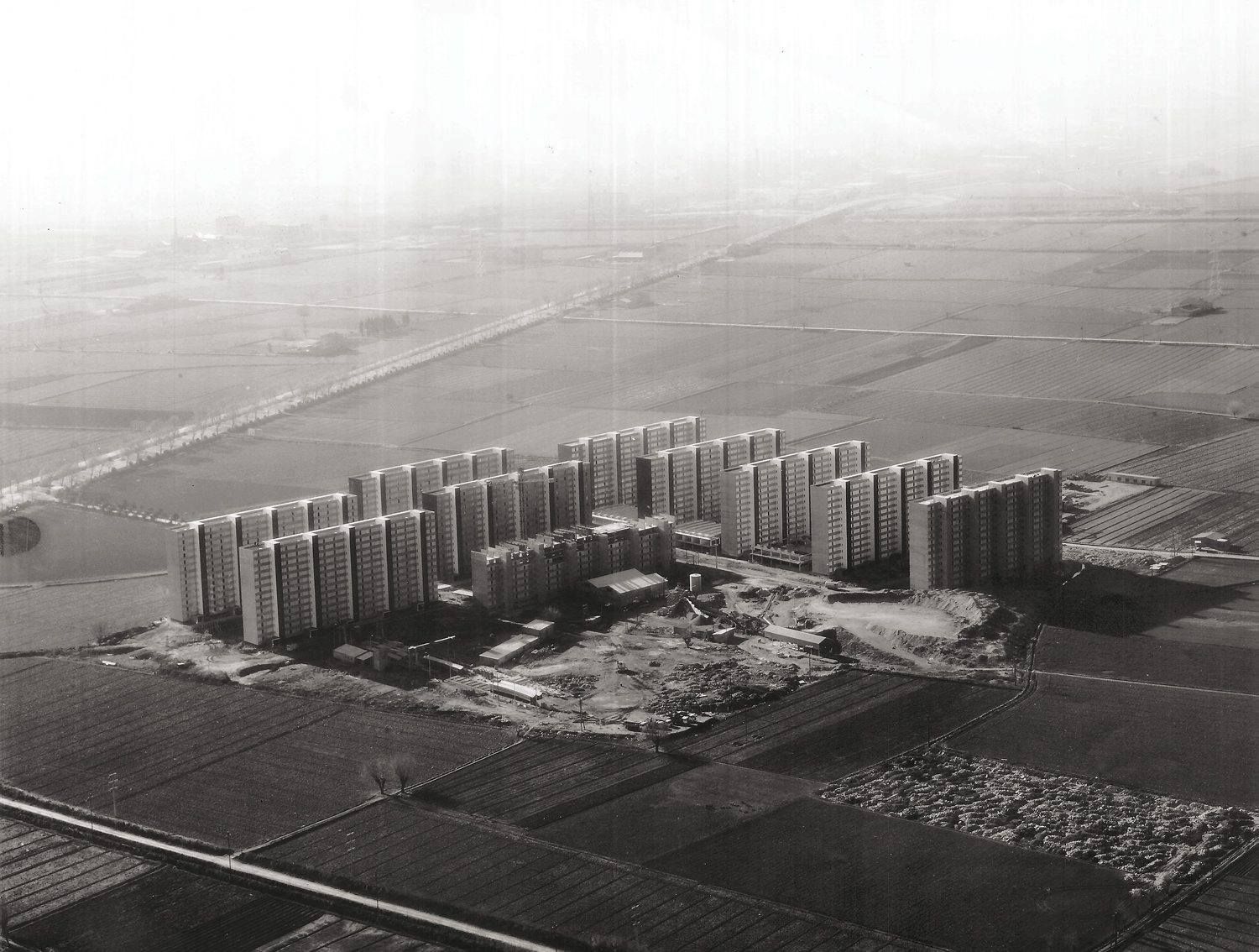
Bellvitge housing estate (L’Hospitalet, Barcelona), during its construction between 1965 and 1975. Surrounded by fields and rural roads; only a small road branching off from the Gran Via connects the industrial park to the general urban structure of the metropolis.
This generated great difficulties for the inhabitants in terms of travel and a problem of disconnection. Often, these new neighbourhoods replaced informal settlements in urban areas that had become too prominent or in spaces that were needed for new infrastructure. The relocation of their former inhabitants, sometimes by force, resulted in isolation and uprooting. The lack of services and opportunities led to the emergence of social conflicts and pockets of poverty; additionally, despite immense efforts, these actions were insufficient to address the problem of self-built neighbourhoods, which continued to consolidate and spread.
“In the blocks where my chaplain friend lives, they paid 15,000 pesetas as an entrance fee. For twenty or thirty years they’ll pay about 300 pesetas a month, and then a little more for however many more years. In 50 years, the flat will be theirs. Most people say, “Don’t work for your children, work for your grandchildren.” Those flats are the smallest in the estate. The kitchen and dining room are combined. In the bathroom, when you’re washing in the sink, you can’t even close the door”.
CANDEL, Francisco, Los otros catalanes, Caralt Editores, Barcelona, 1977.
The various estates also differed in their construction systems. While small-scale projects maintained traditional construction systems, larger ones tended to incorporate new technologies for the industrialization of construction. In both cases, almost from the beginning, the low quality of the housing led to complications that were difficult to resolve: entire neighbourhoods of buildings had construction problems, in some cases to the point of threatening ruin. Problems such as those caused by high-alumina cement, which is cheaper but much less durable, affected entire housing estates and neighbourhoods in Catalonia, causing enormous disruptions to residents.
Not all housing estates suffered social and construction problems; some remedied their isolation by creating fragments of quality urban areas, with dignified and attractive architecture that managed to alleviate the stigma that often accompanied these developments. It is the case of the Montbau housing estate in Barcelona, built on the slopes of Collserola between 1957 and 1965, designed by the architects Antonio Bonet Castellana, Guillermo Giráldez Dávila, Joan Bosch Agustí, Josep Maria Soteras Mauri, Manuel Baldrich Tibau, Pedro López Iñigo, and Xavier Subias Fages. It was developed by the Municipal Housing Board with the clear aim of differentiating it from the rest of the urban fabric in the area – which had grown haphazardly in isolated, incoherent elements – and to prevent the construction of disjointed buildings by generating a larger, truly significant urban intervention. To that end, municipal experts travelled to Frankfurt, Cologne, Bonn and Berlin, and they visited Interbau and other European reconstruction zones. The urban quality in Montbau is evident in the provision of services and in the configuration of the public spaces. It has a higher density than other developments, as it took the CIAM as a model and fostered a kind of community life that creates conditions in the housing estate that are more like a dense Mediterranean city. In Montbau, mid-sized blocks in various configurations are combined with clusters of single-family homes. The layout of the complex also takes into account its status as an urban limit and a transition into a natural space.

Barrio de Montbau, 1957-1965, Barcelona © Julio Fonte. Fundación Docomomo Ibérico.
Conclusión
There can be no doubt that the Ministry of Housing was very active in the final decades of the Franco regime. With the Second National Housing Plan (1961-1975), the regime managed to build four million housing units and, at some point, the supply met the demand. Between 1960 and 1980, the number of homes doubled, rising from 7.7 million in 1960 to 10.6 million in 1970 and 14.7 million in the early 1980s. During that period, most Spanish citizens were able to own a home, which they paid for in 8 to 10 years, even though bank interest rates often exceeded 10% annually. However, these policies and others implemented by the Ministry of Housing had effects with consequences that have persisted to this day.
The actions of the Ministry of Housing had direct consequences for the current crisis in access to housing. By the end of the Franco regime, 77.8% of Spanish citizens had become homeowners. Since then, changes in different land laws and the dynamics of a speculative market have led to such a rise in housing prices that, today, people’s capacity for savings is too low to guarantee them access to housing.
Also in relation to rental housing, the actions of the Francoist government contributed to the current crisis in access. On the one hand, there was a decrease in the number of rental units: a consequence of many Spanish citizens becoming homeowners and a lack of public developments of social housing units for rent. On the other hand, while the legislation on leases protected tenants by freezing prices and issuing mandatory extensions, it discouraged investment in real estate for rent. The liberalization of the rental market that came with the democratic era and the Boyer Law, and the limited results of the containment policies devised by the public administrations since then, combined with speculation and globalization, have led to an exacerbation of the problem of access to housing in the rental market as well.
Over time, housing estates have become symbols of an era, and they have persisted in the collective imagination through film, for example. In many of these neighbourhoods, life has not been easy, as entire neighbourhoods have suffered from construction pathologies, with issues such as aluminosis. Some, due to their isolation and social homogeneity, were affected by economic crises and became pockets of poverty and a lack of opportunity. Over time, large sums of public money were invested to provide many of these neighbourhoods with the services befitting a welfare state and quality public spaces to improve quality of life and alleviate, in part, the stigmatization of these areas and their inhabitants. Today, the urban quality and social perception in most of these neighbourhoods has improved; we can say that the situation is much better than that of comparable urban models in countries such as France.
Bibliography
AAVV, GARCÍA PABLOS RIPOLL, José María, ed., Periferias: ciudad, paisaje y territorio, Ediciones Asimétricas, Madrid, 2023.
SUBIRÀ, Roger, 40 anys – 40 raons, Incasol, departamento de Territori de la Generalitat de Catalunya, Eix 2 Habitatge Assequible, Barcelona, 2021.
DÍEZ MEDINA, Carmen, MONCLÚS, Javier, Ciudad de bloques. Reflexiones retrospectivas y prospectivas sobre los polígonos de vivienda “modernos”, Abada Editores, Madrid, 2020.
CÁNOVAS, Andrés, ESPEGEL, Carmen, DE LAPUERTA, José Maria, MARTÍNEZ ARROYO, Carmen, PEMJEAN, Rodrigo, Vivienda Colectiva en España. Siglo XX (1929-1992), Biblioteca TC, Valencia, 2013.
PÉREZ-ESCOLANO, Víctor, “Arquitectura y política en España a través del Boletín de la Dirección General de Arquitectura (1943-1957)”, in Ra Revista de arquitectura 15, 2013.
TATJER, Mercè, LARREA, Cristina (editoras), Barraques. La ciudad informal del segle XX, Institut de Cultura, MUHBA Museu d’Història de Barcelona, Ajuntament de Barcelona, Barcelona, 2011.
CAZORLA SÁNCHEZ, Antonio, Fear and Progress: Ordinary lives in Franco’s Spain 1939-1975, Wiley-Blackwell, Hoboken, New Jersey, EEUU, 2009.
CENTELLAS, Miguel, JORDÁ, Carmen, LANDROVE, Susana, eds., La vivienda moderna, Registro DOCOMOMO Ibérico, 1925-1965, Fundación Caja de Arquitectos/Fundación DOCOMOMO Ibérico, Barcelona, 2009
AZPILICUETA ASTARLOA, Enrique, La construcción de la Arquitectura de Postguerra en España (1939-1962), tesis doctoral, 2004
CANDEL, Francisco, Los otros catalanes, Caralt Editores, Barcelona, 1977. JUBERT, Juan, “La O.S.H.: características de la gestión de la Obra Sindical del Hogar, La OSH y la política de vivienda: la política de vivienda del estado y la OSH una cronología paralela”, in Cuadernos de arquitectura y urbanismo 105, Barcelona, 1974.