Buildings of Santiago Rey Pedreira
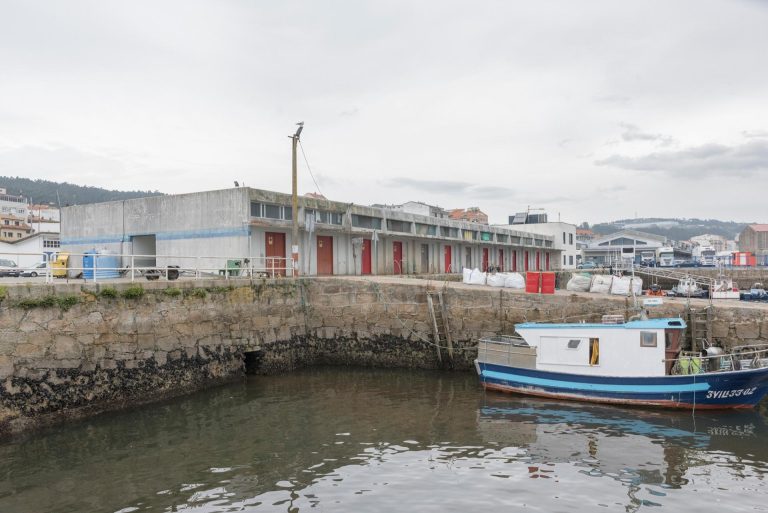
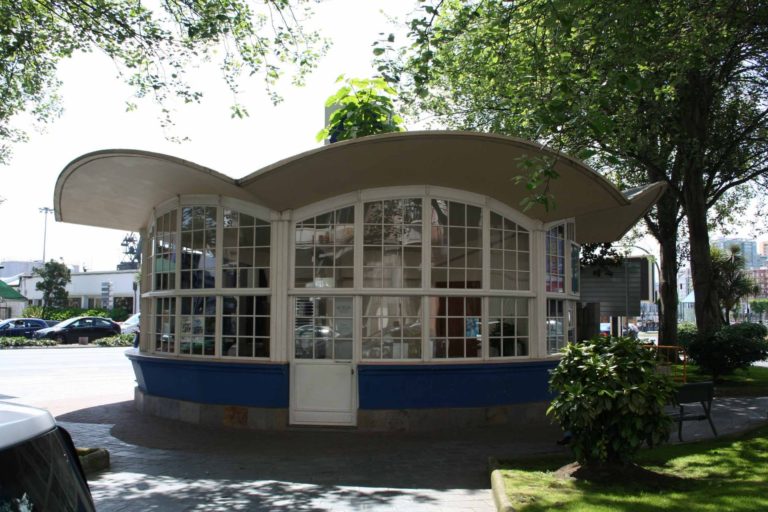
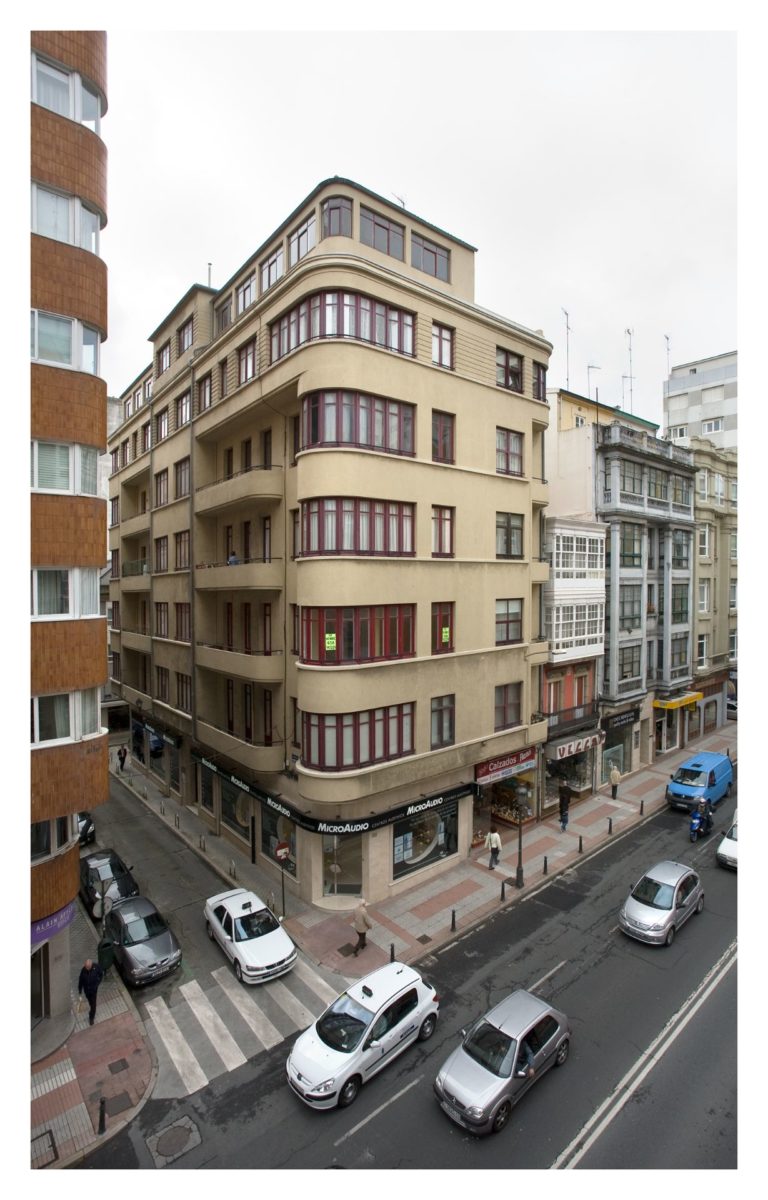
4 buildings

A Coruña, 1902-1977
Born into a family of independent professionals, he moved to Madrid to study architecture from 1920 to 1926. During his studies in the capital, he collaborated with the prestigious architect Antonio Palacios. Upon returning to Galicia, he joined the team of the municipal architect of A Coruña, Pedro Mariño. At the same time, he began entering circles that espoused Republican ideology and Galician nationalism, contacting with figures like Castelao and Risco.
He pointed to his visit to the 1929 Barcelona International Exposition as a fundamental milestone in his career. There he was deeply impressed by the German Pavilion by Mies van der Rohe and Lilly Reich and became acquainted for the first time with the principles of Walter Gropius and the Bauhaus School. This early introduction to the Modern Movement sparked his interest in the CIAM congresses, and he later incorporated some of those principles into his urban planning practice. An early example of this influence is the urban development and expansion project for Ferrol, also from 1929, which he accessed through a competition, and which was only partially implemented.
In terms of residential architecture, in the urban centre of A Coruña he relied on the nautical aesthetic that was typical of early rationalism: compositions based on horizontal lines accentuated with tubular railings, balconies with rounded corners, and a special emphasis on angles achieved through projecting volumes. Good examples of this language are the Formoso and Cés Houses, built in collaboration with Pedro Mariño in 1933, as well as the project for the modern Coruña Cinema in 1937. This first residential complex was followed by others in A Coruña throughout his career and, later, in the 1950s, in Madrid. The latter, which are less well-known, are notable not so much for the compositional innovation on the façade as for the functional organization of the floor plan, incorporating the façade courtyard model introduced by Luis Gutiérrez Soto.
Beginning in the 1930s, Rey Pedreira succeeded Pedro Mariño as municipal architect of A Coruña, while also holding various institutional positions: at the National Housing Institute, with the Royal Provincial Academy of Fine Arts, and as co-founder of the Architects’ Association of León, Asturias, and Galicia – all this without ever leaving behind his practice as an independent architect. His projects during this period included developing the Domus housing cooperative in the garden city area of A Coruña.
In designing public facilities, he set himself apart for his innovative spirit and interest in technical research. His most emblematic work in this field is the San Agustín municipal market, for which he designed a parabolic concrete roof with a 28-meter span, inspired by European models such as the Reims Central Market.
After the Spanish Civil War, he opted for a classical language in designs such as the Riazor Stadium, which incorporated a lighthouse tower and an impressive monumental portico, no longer standing, evoking the German fascist architecture of the time and, specifically, the Olympic Stadium in Berlin. However, he soon returned to a distinctly modern architecture, characterized by structural experimentation. One prominent example is the Riazor Palace of Sports, where the innovative suspended roof was designed using steel cables stretched between two large concrete arches.
Remarkable designs from the later years of his career include several residential towers, which transformed the urban landscape of his hometown: the Torre Golpe, the Torre Coruña, and the Torres y Sáez building. What would have been the culminating project of his career – a communications tower on the Santa Margarita hill, accompanied by a convention centre under a large dome – was thwarted by political changes in the city.
Biography by Roger Subirà
Bibliography