Buildings of Fernando Cassinello Pérez
5 buildings


Almería, 1928-Madrid, 1975
Fernando Cassinello was born in Almería, where he completed his secondary studies before moving to Valladolid. At 17, he moved to Madrid with the aim of preparing for entrance to the School of Architecture. After finishing his architecture degree, he settled halfway between Madrid and Almería, opening professional offices in both cities. Although he developed projects in different parts of Spain, it was in Almería and the surrounding province where most of his activity was concentrated and where most of his works are located. Despite his brief career, cut short by his premature death, the archives of the Architects’ Association of Almería contain more than 500 records of projects he designed in the province.
Upon completing his studies, he showed an interest in teaching. Initially he leaned towards Art History, but soon focused on Graphic Expression and, finally, Construction, an area in which he ultimately became chair at the Madrid School of Architecture. In addition, he served as acting director of the Torroja Institute of Construction, and he engaged in extensive research and published scientific articles, especially in the journal Informes de la Construcción, for which he wrote more than 120 articles. His writings include several monographs dedicated to different aspects of brick construction. All this research and dissemination was aimed at compiling a comprehensive encyclopaedia of construction, an ambitious personal project that never came to light due to his early death.
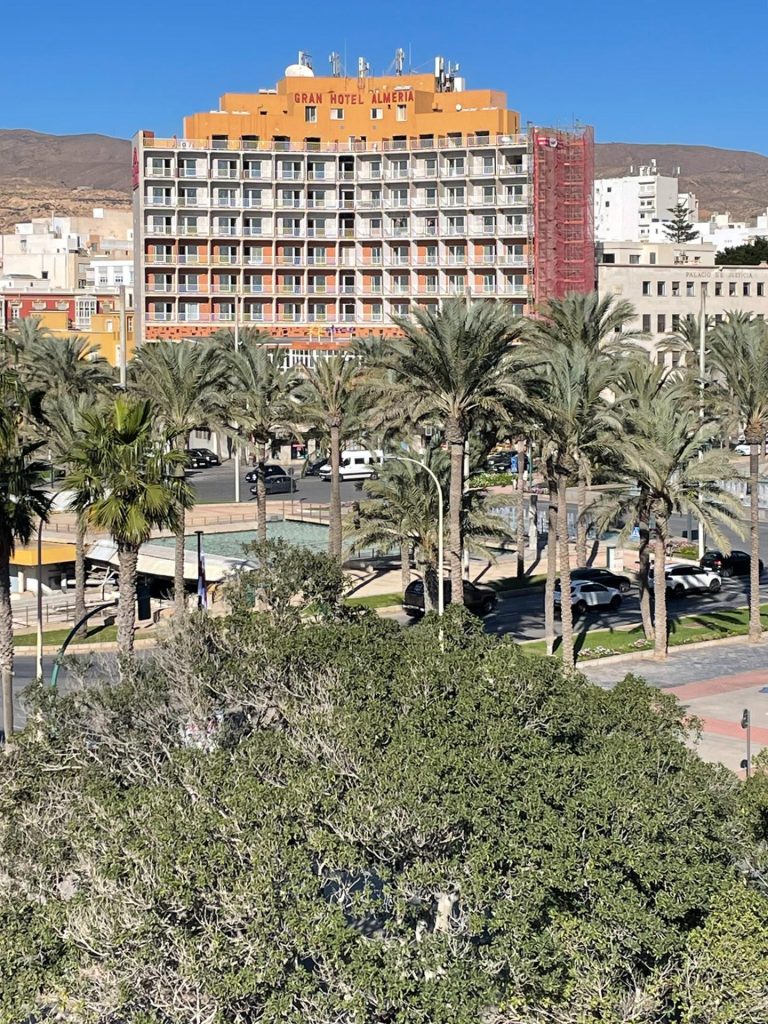
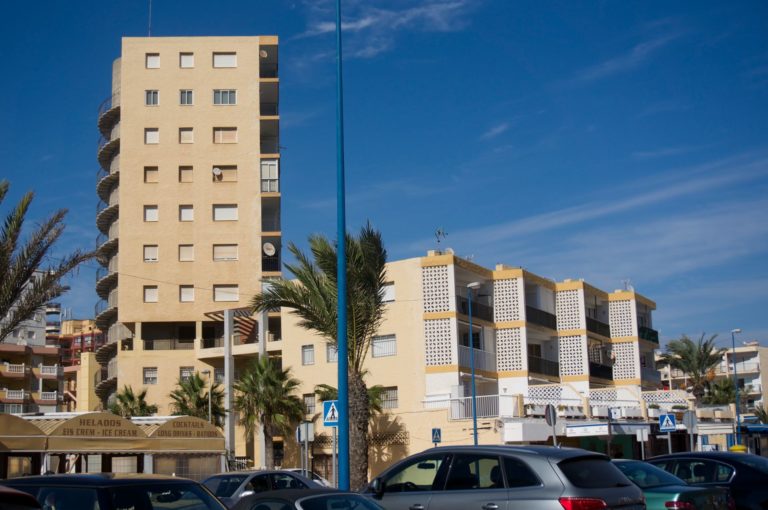
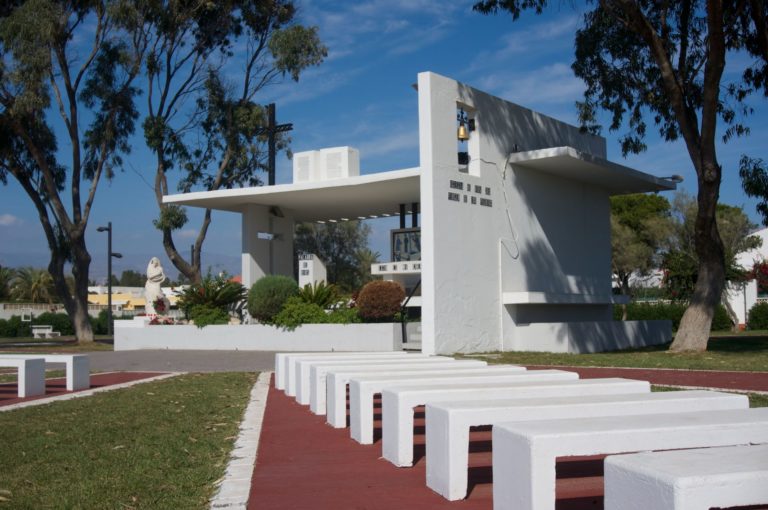
His work served as a milestone for modern architecture in Almería. Many of his projects—including the Gran Hotel Almería, the open-air chapel in Aguadulce, the El Palmeral apartments, and the three Star Building towers facing the sea—were associated with developments for tourism in the province. Alongside these achievements of an undeniable quality, Cassinello also designed projects of a markedly speculative nature, whose strong impact on the city’s urban landscape was derived from their outsize scale in relation to their surroundings. In the course one of these projects, the Azorín building, a tragic event occurred that had a major impact on his professional career: the collapse of a 10-story building in the structural phase, which killed 15 people. As a consequence, he was sentenced to prison and ordered to pay compensation. However, subsequent investigations attributed the tragedy more to the dubious quality of the construction, in the context of real estate speculation, than to direct negligence on his part as the architect.
In 1975, during a trip to Nigeria, he contracted a tropical disease. Although he was able to return to Madrid for treatment, he did not recover from the illness and died at the young age of 49. The short span of time between the Azorín tragedy his death, just five years, contributed to the failure of his work to become the subject of systematic study or widespread dissemination.
Biography by Roger Subirà
Bibliography