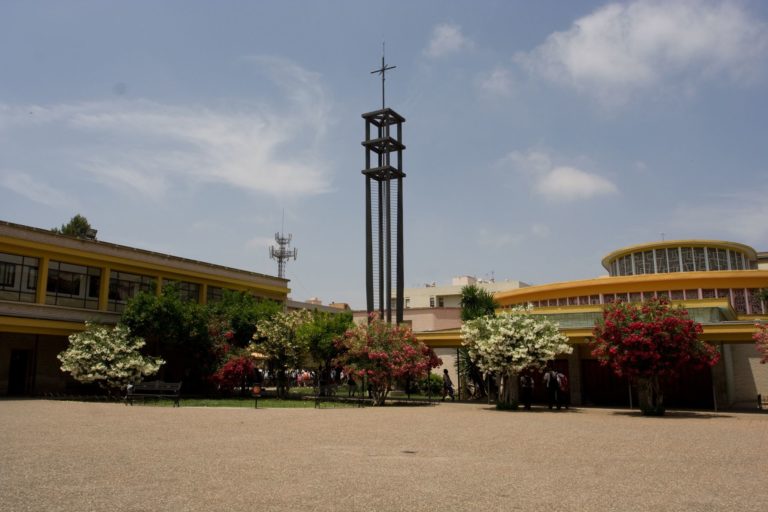
Buildings of Fernando Barquín y Barón
7 buildings

Sevilla, 1917-Madrid, 1965
Fernando Barquín y Barón was educated at the Jesuit school in his hometown of Seville. Growing up in a family that cultivated a sensitivity for the arts – and under the influence of his older brother, who was also an architect – he showed a clear interest in drawing and painting from a young age. At the same time, his family’s profound religious convictions led to his connections with a number of ecclesiastical and Catholic institutions: he was a member of Opus Dei and the Diocesan Council for Catholic Action, in addition to participating in Seville’s Provincial Welfare Board.
In 1955, he joined the Catholic Association of Propagandists, an entity focused on promoting proselytism in public life and in professional practice. He also maintained a close relationship with Cardinal José María Bueno Monreal, a figure who played a major role in the urban transformation of Seville – particularly in the promotion of new housing developments – who relied on him to promote changes in charitable institutions associated with social housing.
He only left Seville to study architecture in Madrid; once he had completed his training, he established his professional office in his hometown, where he built most of his work. Like many architects of his generation, his education was defined by a Beaux Arts style that gradually evolved, throughout his professional practice, towards an adoption of modern movement principles.
His work includes interventions of considerable relevance in Seville, such as the restoration of the Real Maestranza bullring, although he is especially remembered for his contributions to the improvement of workers’ housing in the Andalusian capital. His close ties with Catholic and charitable organizations resulted in considerable professional activity focused on promoting social housing developments spearheaded by such institutions, including the Árbol Gordo complex, designed for the National Housing Institute (INV) in 1953, which consisted of 468 units.
He was also a member of the Royal Board of Trustees for Affordable Housing, where, in collaboration with ecclesiastical and political authorities, he participated in revising its statutes with the goal of addressing the working class housing shortage more effectively. These reforms incorporated innovative approaches aligned with modern European trends in housing – health, sunlight, and comfort – while accounting for the climatic conditions and way of life in southern Spain. This stance led to a progressive distancing from the ideological preconceptions that had characterized public housing policies during the period of autarky and the transition towards a more pragmatic and technocratic approach. He was recognized with an appointment as delegate of the provincial council for Seville in 1961.
His institutional involvement resulted in important commissions that brought his ideas to life in large-scale collective projects, such as the Pío XII and La Candelaria developments and the San Jerónimo complex, all in Seville. Along with a large group of other architects, he participated in the design for the Puerta Bonita neighbourhood in Madrid.
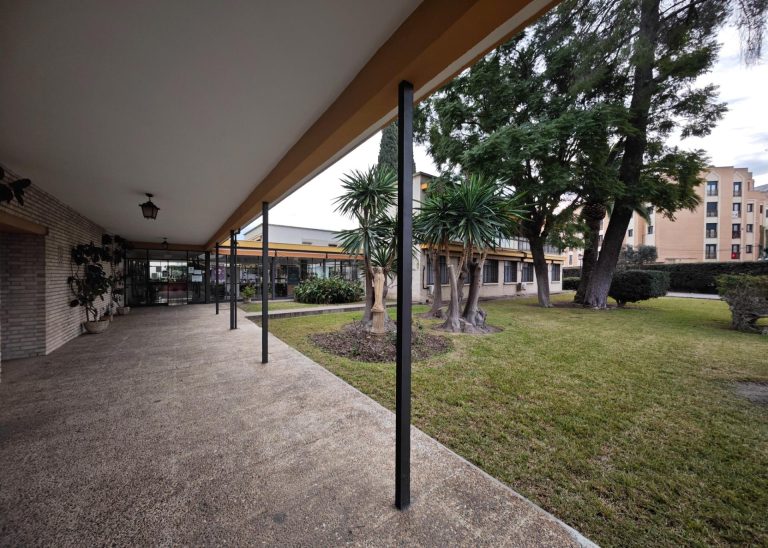
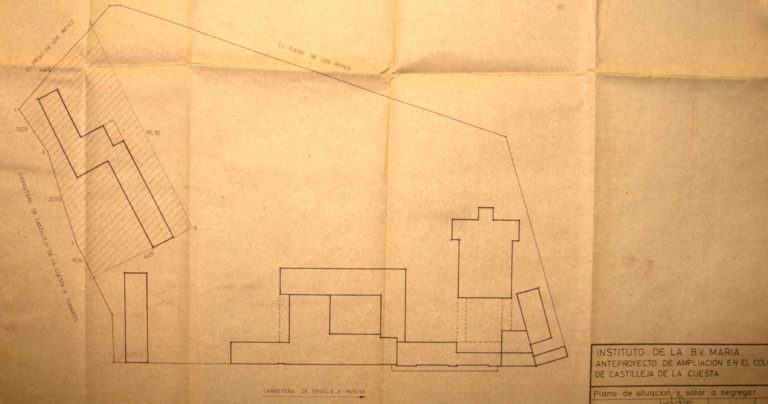
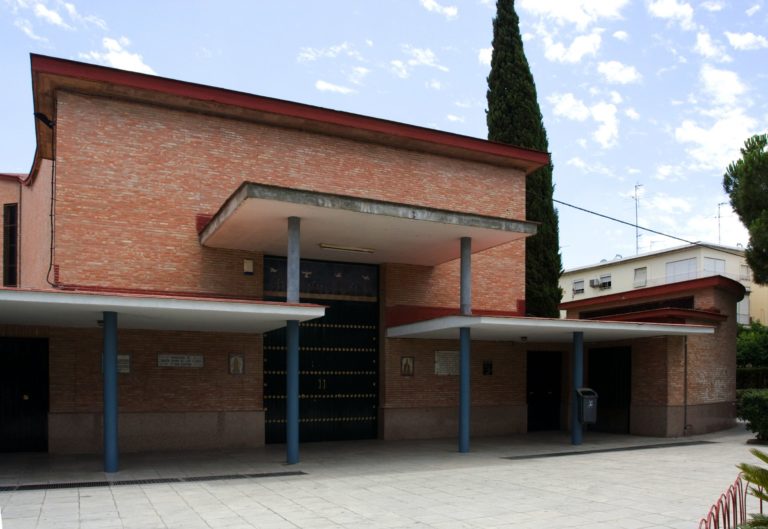
A significant part of his production, which he developed on his own, involved commissions related to the church: parishes, convents, seminaries and schools. At the same time, he collaborated with his brother Joaquín on various projects and competitions, including the construction of public buildings, such as the schools Colegio Bienaventurada Virgen María and Colegio de las Irlandesas, run by the Institute of the Blessed Virgin Mary.
He died in Madrid after a prolonged illness, although his funeral was held in Seville, where he had developed his professional career. His relevance in the political and ecclesiastical spheres was evident at his funeral, which was presided over by Cardinal Bueno Monreal and attended by prominent authorities of the regime in Andalusia. One of his public works, the Mercado de la Paz market in Alcalá de Guadaíra, was opened posthumously. Both his archive and that of his brother Joaquín were donated to Fundación FIDAS for their conservation, study, and dissemination.
Biography by Roger Subirà
Bibliography